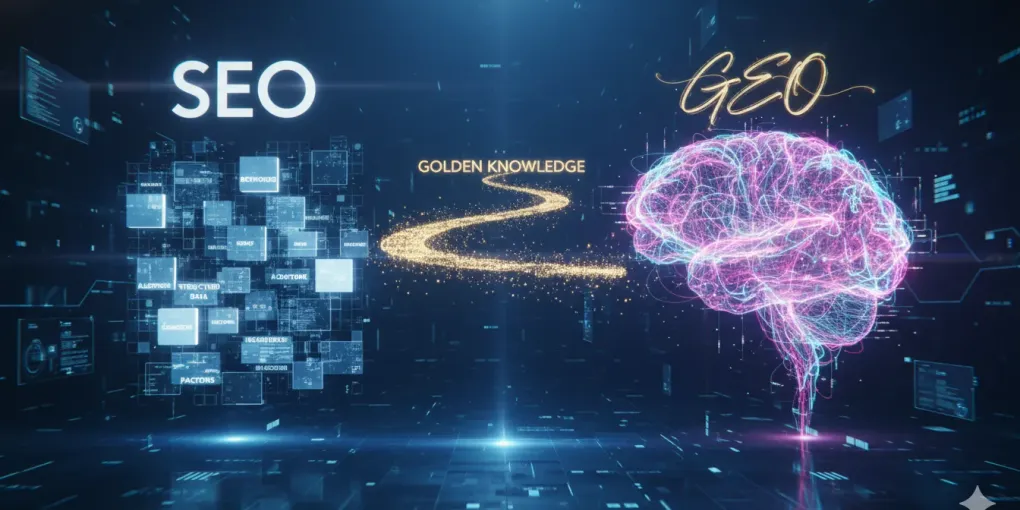
Is SEO Dead? A 35-Year Veteran's Take: In 2026, Great SEO IS Winning at GEO
Hi everyone, this is Neo.
Lately, a lot of my friends running independent sites are anxious about the same question: “ChatGPT, DeepSeek, and these AI models are getting bigger every day — is all the traffic going to dry up? Is SEO even worth doing anymore?”
The industry has even coined a new term — GEO (Generative Engine Optimization) — as if we need to throw out fifteen years of SEO experience and learn some brand-new “magic.”
But is that actually true?
Today I want to share a genuinely deep interview. The guest is Grant Simmons, a 35-year SEO veteran. His take is sharp — it might even flip your understanding of “SEO in the AI era”: great SEO is, in itself, great GEO.
If AI-era traffic feels harder to get, it’s probably because — the SEO you’ve been doing wasn’t actually that “great” to begin with.
01 So-Called GEO Is Really Just “Getting Back to Basics”
At Google Search Live in December 2025, Google’s John Mueller dropped a line worth pondering: “Good SEO is good GEO.”
Grant Simmons couldn’t agree more. Whether it’s a traditional search engine like Google or today’s LLMs, their core job is identical: understand user intent and deliver the best answer.
Neo’s take:
A lot of independent site owners were really “exploiting loopholes” with SEO — keyword stuffing, spammy link building, spun content. Those tricks may have worked in the past, but in the eyes of AI, they’re just “garbage data.”
Machines are becoming more human every day. What they’re hunting for is content that is genuinely meaningful, deep, and actually solves problems. If you’ve been consistently building topical authority and putting out high-quality content, congratulations — you’ve been doing GEO all along. No need to panic.
02 How Does AI Decide Who to “Cite”?
This is probably the question everyone cares about most: “How do I get my content cited — with a link — by AI search like ChatGPT Search or Google AI Overview?”
Grant pointed to Google’s latest patents, which reveal two core mechanisms behind AI:
1. The Response Confidence Engine (Consensus)
AI is cautious. Before it generates an answer, it needs to verify the information is “true.” How? Through consensus. If only one obscure little site on the entire web is saying something, AI won’t trust it. Only when multiple sources echo the same point does AI treat it as “consensus” worth presenting.
2. The Linking Engine (Citation)
This is what decides whether you get traffic. Once AI confirms the information is credible, it asks: can this passage be linked to a specific source? That requires clear, self-contained “knowledge chunks” (chunklets) in your content — aligned with consensus and clearly attributable.
Neo’s take:
This part is huge! A lot of sellers, chasing “originality,” deliberately write takes that contradict industry common sense, thinking it’ll grab attention. Big mistake! In the AI era, “being different” without “consensus” behind it gets filtered out by AI entirely.
The right move: build on the industry consensus (facts everyone accepts), then add your own unique data or insights.
03 The Golden Rule: Create “Golden Knowledge” Content
So what kind of content has both “consensus” and AI appeal? Grant offers a concept: Golden Knowledge.
Golden Knowledge = Uniqueness + Consensus.
Concretely, it means including:
- Your own data (first-hand reviews and sales data nobody else has)
- Your own opinions (deep analysis grounded in experience)
- Supporting evidence (screenshots, videos, authoritative citations)
But your unique content must also align with the industry’s overall direction.
A Case Study:
Say you sell outdoor camping lanterns.
- Wrong: Copy the Amazon product description and reword it a bit. (That’s duplicate content — AI ignores it.)
- Wrong: Claim your lantern can be turned on and off with your mind. (Violates physics, has zero consensus — AI thinks you’re full of it.)
- Golden Knowledge: Acknowledge it’s an LED lantern (consensus), then publish a battery-life test report from real -20°C conditions (unique data).
Result: When AI answers “best lanterns for winter camping,” it will cite your data — because it’s the only real-world dataset on the web and it aligns with the consensus that camping lanterns need to handle cold.
04 The Biggest Mistake: Trying to Please Everyone
Grant points out that the biggest mistake many SEOs make is topic drift. One page trying to cover every keyword — selling, storytelling, chasing trends all at once.
The result: blurred page intent. LLMs love “easily extractable” passages. If your page is a mess, AI has no idea which paragraph to pull to answer a user’s question.
Neo’s take:
Independent sites need to practice subtraction. Every page should answer one core question. Keep the structure clean so AI can see at a glance: “Oh, this passage answers product lifespan,” “that passage covers installation steps.” Structured content like this is the easiest for AI to feed to users.
Summary: How to Survive 2026
Grant’s advice for 2026 is refreshingly down-to-earth: “Double down on what’s working.”
Don’t ignore AI traffic just because it’s still a small slice, and don’t panic yourself into chaos. “Be so good they can’t ignore you.”
Neo’s summary:
- Don’t pit SEO against GEO. If you’re seriously creating content that’s valuable to users, you’re doing GEO.
- Consensus is the foundation. Don’t fabricate for the sake of “originality” — ground everything in facts.
- Exclusive data is king. Offer first-hand test data and case studies no one else can.
- Focus on one intent per page. Don’t let your pages become a grab bag.
In this AI era, shortcuts are drying up. But for the honest operators who truly go deep in their niche, this is actually the best of times.