Is SEO Dead in 2026? No — It Just Looks Nothing Like You Remember
Hi everyone, this is Neo.
After all these years running independent sites, I’ve noticed a lot of founders and operators are still doing SEO with the “old calendar” from a few years back. Every day they stare at keyword rankings and traffic ups and downs, and the moment the numbers wobble, they panic.
A couple of days ago, I read a really thoughtful article on Search Engine Journal titled SEO Is No Longer A Single Discipline. It hit home.
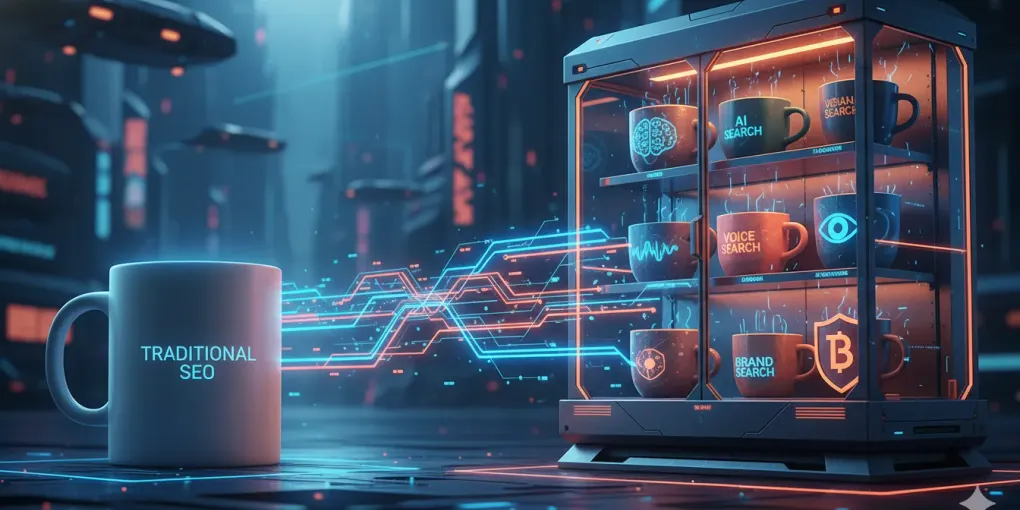
If old-school SEO was like a favorite coffee mug — simple, direct, grab-and-go (backlinks, articles, code tweaks, three moves and you’re done) — then today’s SEO is a whole cabinet full of different mugs. Each one is different, and you might need every single one of them.
Why? Not because SEO got harder, but because the way users “discover” things has changed.
Today, Neo is going to combine that article with my recent observations to talk about what indie site SEO should actually look like in 2026.
1. Traditional SEO: The Core Is Still There, But It’s Not Enough Anymore
First, don’t panic. The SEO fundamentals you know are still the foundation.
- Crawl & Indexing: This is the entry ticket. If Google can’t even crawl your page, everything else is empty talk. Robots.txt is still the gatekeeper.
- Page Experience: Core Web Vitals are still Google’s yardstick for user experience. If your site loads slowly and the layout jumps around, users will still leave.
- Content Architecture: H tags, internal links, and structured data — the “translators” that help machines understand your content — are still crucial.
Neo’s take: A lot of the time we think SEO has stopped working, when really the foundation was never solid. Nail those “big three” basics first — that’s the passing line. But if that’s ALL you do in this AI-dominated era, you might not even pass.
2. AI Search: When Machines Start “Fighting”
Now there’s a “middleman” in user search — AI (like ChatGPT, Google AI Overview, Perplexity).
That brings a huge new challenge: the AIs “fight” each other.
According to a 2025 BrightEdge study, for the same brand query, ChatGPT, Google AI, and other AI platforms disagree 62% of the time!
Awkward. Your brand might be praised to the skies in Google AI, yet be a no-show in ChatGPT — or worse, get misattributed.
What does this mean for us? We used to fight for page one rankings on Google. Now we need “brand protection.” You have to monitor how your brand appears across the major AIs.
- Which pages of yours does AI cite?
- How does AI describe your products?
- When AI recommends your competitors, what reasons does it give?
Neo’s take: This is what’s called AEO (AI Engine Optimization). Your content isn’t just for humans anymore — it needs to be written so AI can easily “parse” and “cite” it. Minimize ambiguity and state your views with textbook-level clarity.
3. Content Strategy: From “Writing Articles” to “Writing Building Blocks”
In the AI era, a long-form wall of text without structure is a disaster.
Modern retrieval systems (RAG) love “chunks.” They don’t throw your whole article at the user — they pull out the single most relevant passage, feed it to the AI, and the AI generates the answer.
That means when you write, you need “building block thinking”:
- Paragraph independence: Each chapter and section should be able to stand alone, answering one specific question.
- Clear structure: H2 and H3 headings should directly answer user questions (e.g., use clear questions as headings).
- No fluff: AI hates detours. Give it the goods directly.
Neo’s take: Stop writing with the old “introduction-body-conclusion” essay formula. Treat every article as a collection of FAQs. Under every subheading sits a high-quality answer block.
4. Visual & Voice: Search With Your Eyes and Mouth
Besides typing, users are getting lazier — and smarter.
- Visual search: Google Lens, Pinterest Lens. Users see something they like and snap a photo to find the same item. Are your image Alt tags written properly? Are your product photos clear? Can AI recognize them?
- Voice search: With smart speakers and phone assistants everywhere, about a third of users search by voice. Voice search is conversational and long-tail. Users don’t say “running shoes recommendation” — they ask “Hey Google, what shoes are good for running a marathon with flat feet?”
Neo’s take: For voice search, your content needs to include this kind of natural-language Q&A (conversational keywords). For visual search, high-quality, multi-angle original images are your core asset.
5. SEO Is Dead? No, It’s the “Glue”
The article ends with a really interesting argument: SEO is no longer a standalone function — it’s an integration discipline.
Before: SEO was SEO, PR was PR, brand was brand. Now:
- SEO + PR: To make AI trust your brand, you need authoritative media coverage (PR), and SEO makes sure that coverage gets indexed and found by AI.
- SEO + Brand: When AI hallucinates wrong info about your brand, SEO uses technical means to correct that “hallucination.”
- SEO + UX: Once users arrive, whether they can complete tasks (convert) is a shared goal of SEO and UX.
Neo’s Summary
Folks, SEO in 2026 really has gotten harder. It’s no longer that single “coffee mug” — it’s a whole cabinet.
But that’s exactly where the opportunity is.
While most people are still agonizing over keyword rankings, if you can:
- Embrace AI: Optimize content structure so AI understands you.
- Value your brand: Build a consistent brand narrative across the web to prevent AI from “misreading” you.
- Go multimodal: Images, voice, video — wherever users are, that’s where SEO belongs.
…you’re already ahead of the starting line.
Don’t try to discover a new continent with an old map.
References: